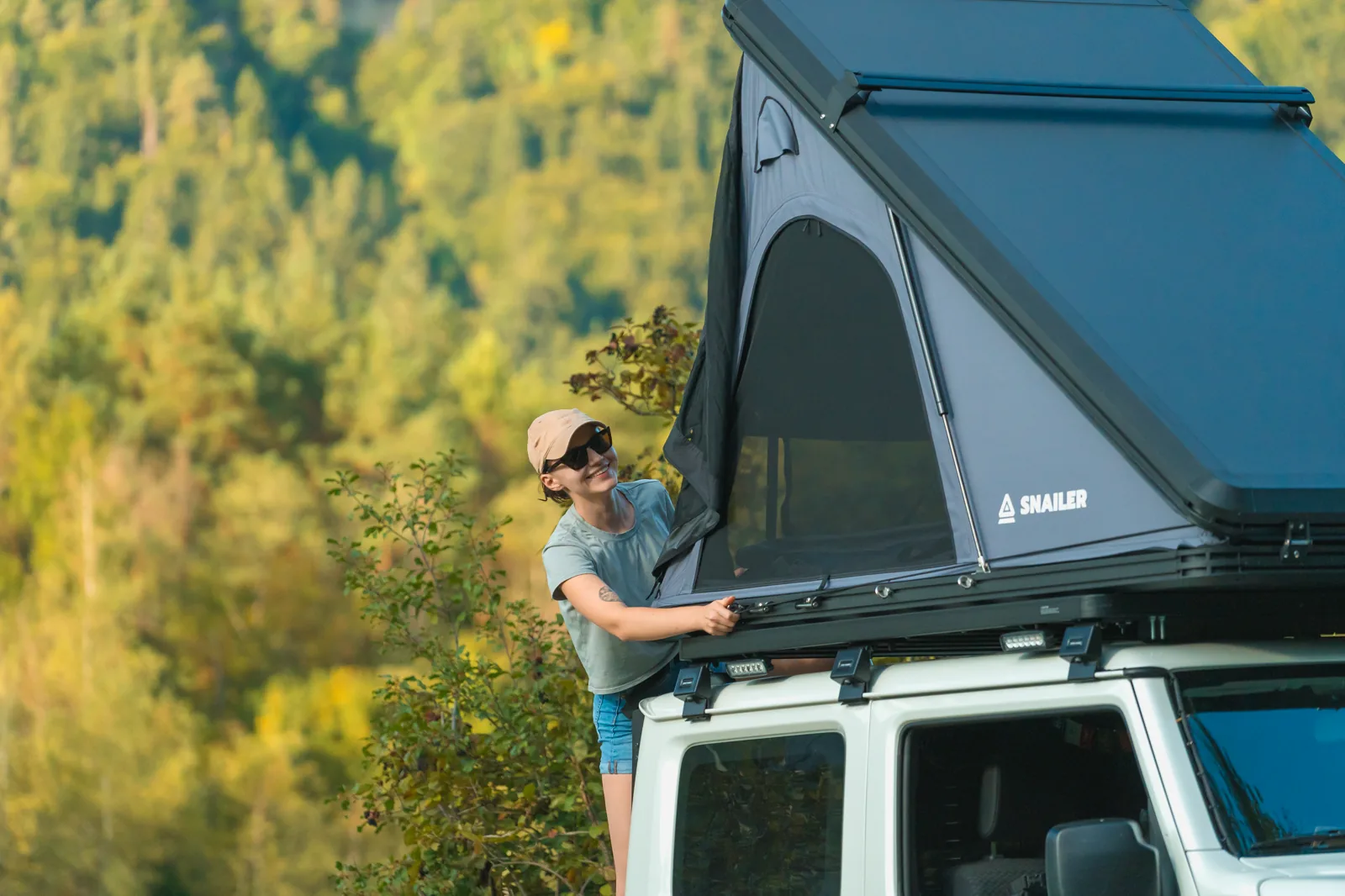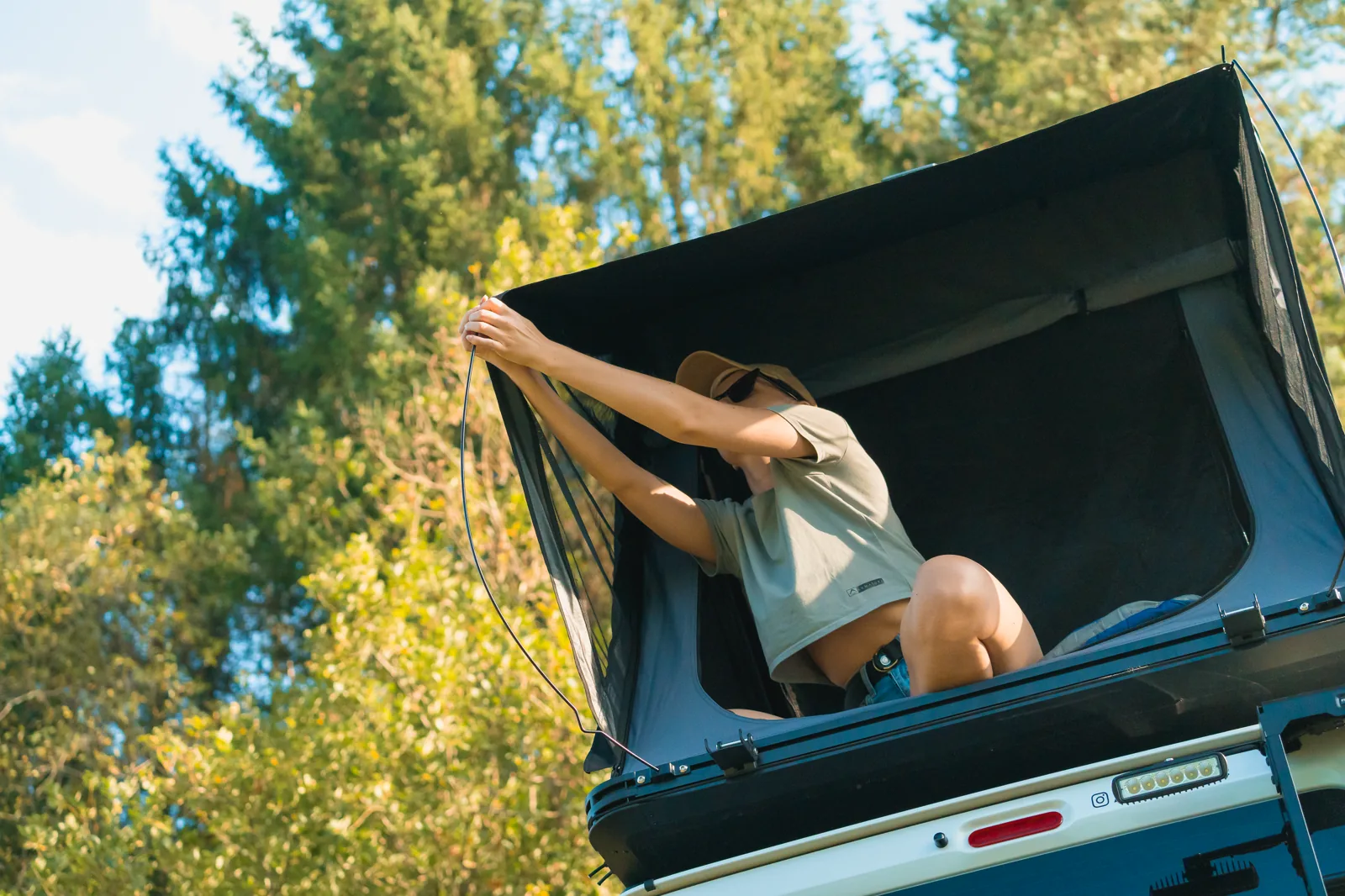

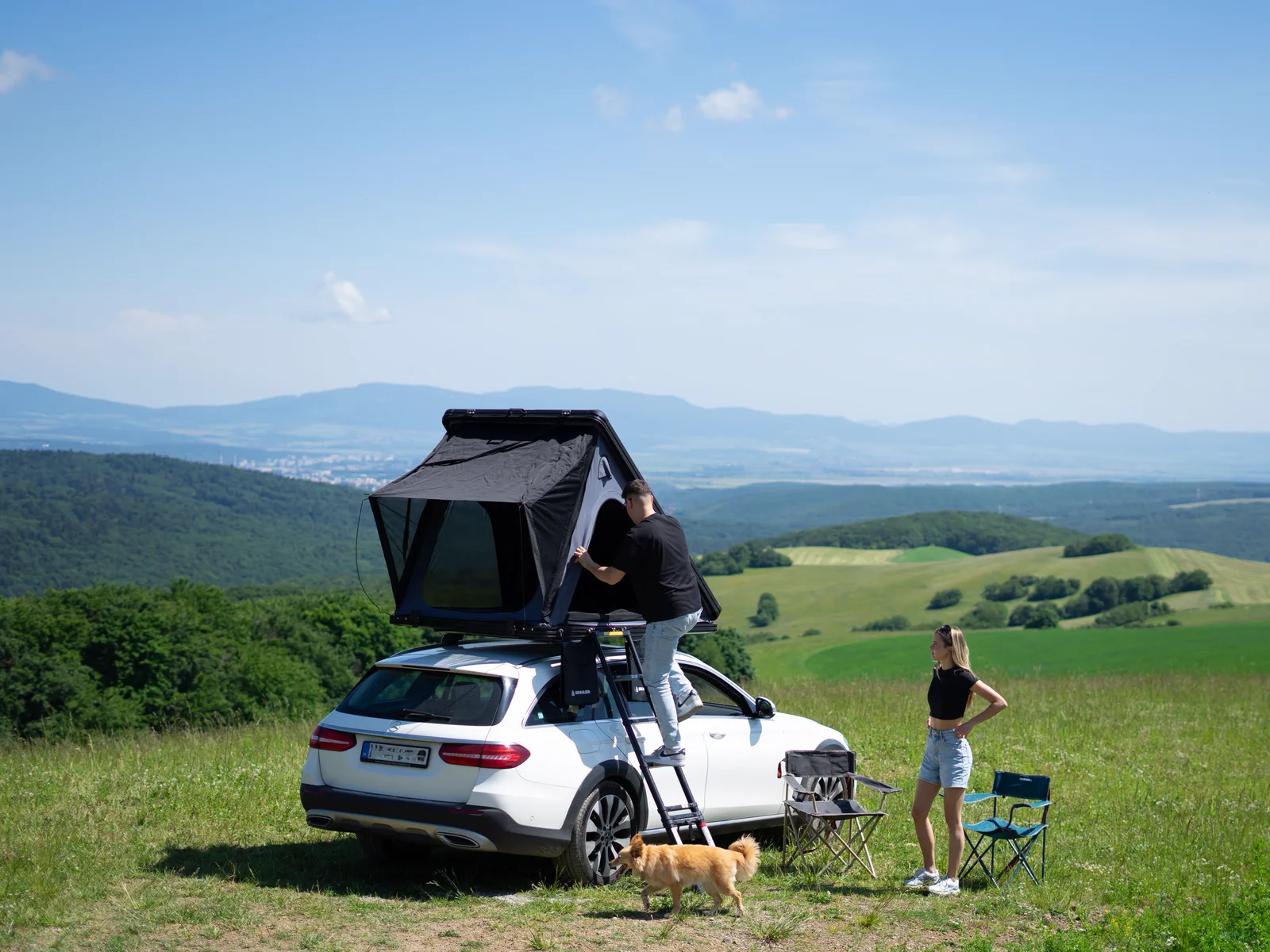
You cannot automatically stay overnight anywhere with a rooftop tent. Although it gives you more freedom than a traditional ground tent, rules on parking, camping, protected areas and private property still apply.
The safest option is to stay in places intended for overnight use: official campsites, designated wild camping areas, car parks that allow overnight stays or private land with the owner’s permission. On the other hand, you should avoid residential streets, national parks outside designated zones, beaches where camping is prohibited and land where you do not have permission to stay.
The basic rule is simple: your car must be parked legally and the location must allow overnight stays or camping. In many countries, using a rooftop tent is still considered a form of camping, even if you do not set anything up directly on the ground.
Where can you safely camp with a rooftop tent?
The safest places are those that are intended for overnight stays. They have clear rules, parking space and often basic facilities. Even there, however, you should always check current guidelines, local regulations and seasonal restrictions.
Official campsites
Official campsites are the safest and most comfortable option. They are intended for overnight stays, so you do not have to worry about being asked to leave in the middle of the night. Most campsites accept cars with rooftop tents in a similar way to caravans, campervans or traditional tents.
The advantages include toilets, showers, drinking water, waste disposal facilities and sometimes an electricity hook-up. Campsites are particularly suitable if you are travelling with children, arriving in the evening or just getting started with a rooftop tent.
When booking, check whether the campsite allows rooftop tents and whether your car can stay directly on the pitch. A tent symbol alone is not enough, as there is no universal sign indicating whether the pitch is also accessible by car.
In the pitch description, look for wording such as “car permitted on pitch” or “car allowed on pitch”, or for a car pictogram next to the pitch. If the site is marked “car-free pitch”, the car must remain in a separate parking area, so that pitch is not suitable for a rooftop tent.
Designated wild camping areas
Wild camping is allowed in some countries, but the rules vary significantly. More relaxed rules can be found especially in Nordic countries such as Sweden, Norway and Finland, where the right of public access applies. Scotland also allows responsible lightweight camping in nature.
There is, however, an important difference when it comes to rooftop tents: the right of public access often applies to travelling on foot and using a small tent, not automatically to motor vehicles. This means you may have the right to sleep outdoors, but not necessarily the right to park off-road or open a rooftop tent anywhere you choose.
It is therefore best to look for places specifically designated for wild camping or bivouacking. These may include forest camping areas, mountain bivouac zones, official nature campsites or locations where local rules explicitly allow overnight stays.
Stay only for a short time, arrive later, leave early and do not leave any rubbish behind. Do not light fires where they are not permitted, avoid damaging vegetation and respect wildlife as well as people nearby.
Car parks intended for overnight stays
For a quick rest between longer journeys, car parks that allow overnight stays can be useful. These may include selected rest areas, camper parking areas, paid motorhome car parks, motorway service areas or urban spaces intended for short overnight stays.
These places may not be as scenic as campsites, but they are practical. Some offer toilets, water or waste disposal, while others simply provide a safe place to spend one night.
It is important to distinguish between parking and camping. If a location only allows overnight parking, it may not allow you to set out chairs, tables, a camping stove or an awning. In some places, even opening a rooftop tent may be considered camping. Always read the signs and rules at the location.
Other places where camping is allowed
With a rooftop tent, you can also stay overnight in other places that allow camping or overnight stays. These may include farms, private meadows, eco-campsites, vineyards, overlanding sites, festival grounds or plots available through camping platforms.
Private locations can be a good compromise between a campsite and more remote overnight stays. You get more peace and privacy while still having clearer rules. The key requirement is always the owner’s permission.
Before you arrive, check where you are allowed to park, whether toilets are available, whether fires are permitted and what the latest arrival time is. Even with permission, behave respectfully and leave the place in the same condition as you found it.
Where is it not recommended to stay overnight with a rooftop tent?
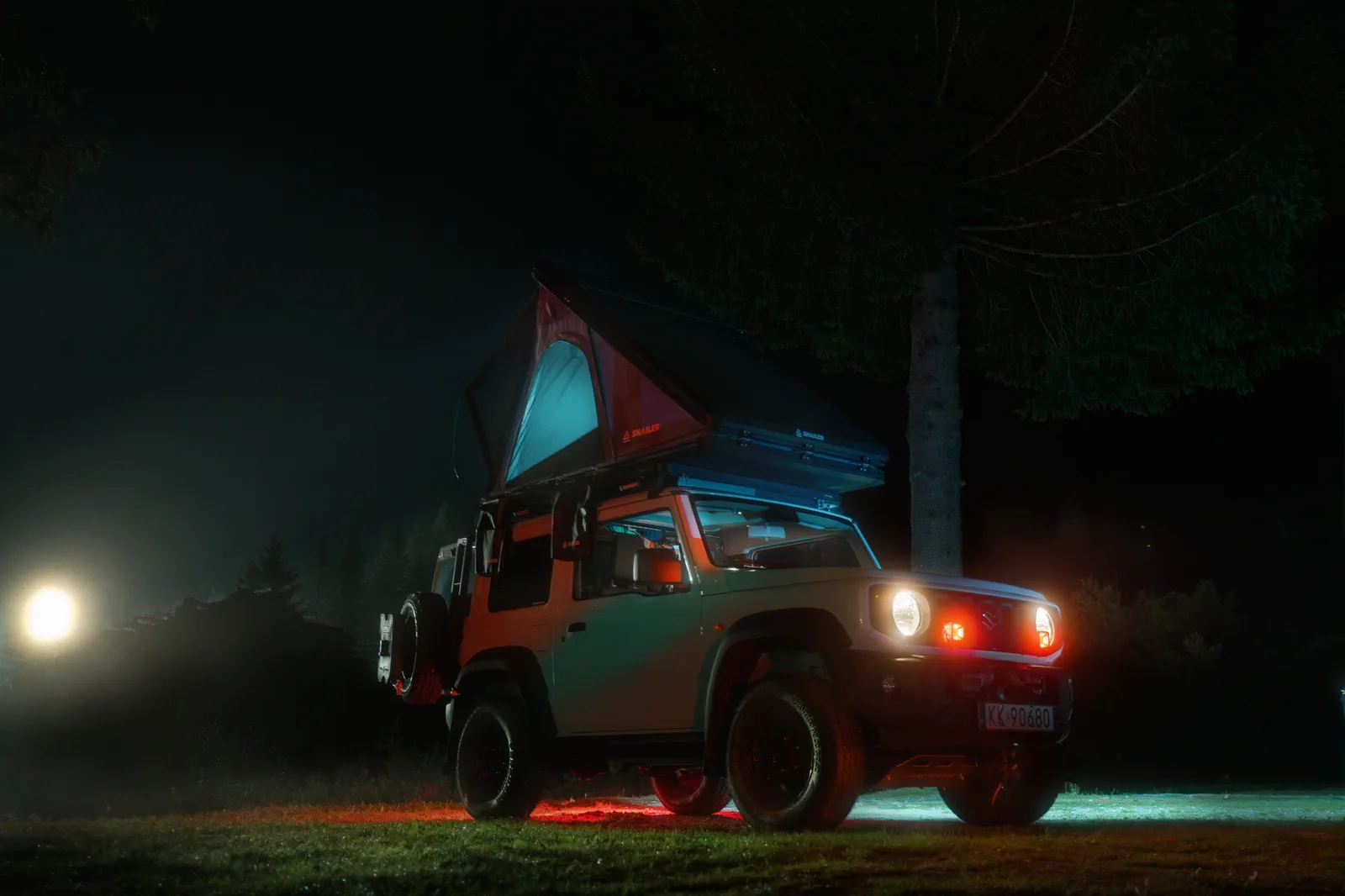
A rooftop tent may seem discreet while it is closed. In the wrong location, however, you may receive a fine, cause conflict with local residents or damage a sensitive natural environment.
Urban areas and residential streets
Residential streets are not suitable for camping. In many towns and cities, sleeping in a vehicle or camping on public streets is restricted or prohibited. Even if parking is allowed, an open rooftop tent may still cause problems.
You should also consider the people who live in the area. An unfamiliar vehicle with an open tent parked in front of a house may feel intrusive, and local residents may report it to the local police.
If you need to stay overnight near a city, look for an official campsite, camper parking area or car park that explicitly allows overnight stays.
National parks and nature reserves
National parks and nature reserves protect sensitive areas, plants and wildlife. In many European countries, camping outside designated areas is prohibited in protected areas.
Car parks near hiking trails, viewpoints, lakes or visitor centres can also be problematic. Some parks allow only short bivouacs in clearly designated zones, while others do not allow them at all.
Always check the park’s official rules before staying overnight. If you cannot confirm that sleeping in a rooftop tent is permitted, choose a campsite or approved parking area outside the protected zone.
Private land without permission
Parking on a meadow, forest road, field track or agricultural land without the owner’s permission may violate the law. Just because a piece of land looks empty does not mean you are allowed to stay there overnight.
The land may belong to a farmer, municipality, private owner or forestry company. Apart from the legal issue, you could block access, damage grass or disturb animals.
If you want to stay on private land, always agree this with the owner in advance. If you cannot find out who owns the land, it is better to choose another location.
Other places that are best avoided
It is also not recommended to stay overnight on beaches, dunes, isolated car parks, industrial areas, near ports, on embankments, by reservoirs, on forest roads with access restrictions or in places marked “no camping” or “no overnight parking”.
Be especially careful in tourist and coastal areas. Local authorities often restrict overnight stays there to protect nature, reduce overcrowding or respond to complaints from residents.
What permits do you need for rooftop tent camping?
Whether you need a permit depends on the country, region and specific type of location. In some places, a campsite booking is enough; elsewhere, you may need a parking ticket, the landowner’s permission or a special permit for a protected area.
Before travelling, check in particular:
- a campsite reservation, if you plan to stay at an official campsite,
- a permit or ticket for overnight parking, if you use camper parking, paid parking or a local designated zone,
- a permit for a national park or protected area, if you are entering a regulated area,
- permission from the landowner, if you want to stay on private property,
- a wild camping or bivouac permit, if the region requires one,
- rules on using fires and camping stoves, especially during dry periods or times of high fire risk,
- an access permit, if you are using a private, forest or mountain road,
- height or vehicle type restrictions, if you are parking in areas with barriers or specific rules for recreational vehicles.
Rules can change depending on the season, weather, visitor numbers or local regulations. The most reliable sources are official ones: municipal websites, national park websites, road authorities and tourist information centres.
How can you find out whether you can camp in a specific place?
If you are not sure whether you can stay overnight in a particular place with a rooftop tent, use this checklist:
- Identify the type of location. Different rules apply to campsites, car parks, forests, beaches, private land and national parks.
- Check official sources. Visit the website of the municipality, park, land manager or official tourist information service.
- Pay attention to signs on site. If a sign prohibits camping, overnight parking or recreational vehicles, do not stay there.
- Distinguish between parking and camping. Being allowed to park does not automatically mean you are allowed to open your rooftop tent.
- Ask for permission on private land. Without the owner’s consent, it is better to choose another place.
- Check seasonal restrictions. Some bans apply only during summer, dry periods, nesting seasons or times of heavy visitor traffic.
- Use apps with caution. Community maps can be useful, but the information may not always be up to date.
- Have a backup plan. Choose a second campsite or parking area nearby in advance.
- Leave no trace. Do not leave rubbish, food waste or washing water in nature.
- Respect local residents. If the location is too close to homes, farms or businesses, it is not suitable for opening a rooftop tent.
Are you ready for your next adventure?
A rooftop tent gives you freedom, comfort and the chance to sleep closer to nature. The best trips, however, start with choosing your overnight location responsibly. Stay only where camping or overnight parking is allowed, and always check local rules before travelling.